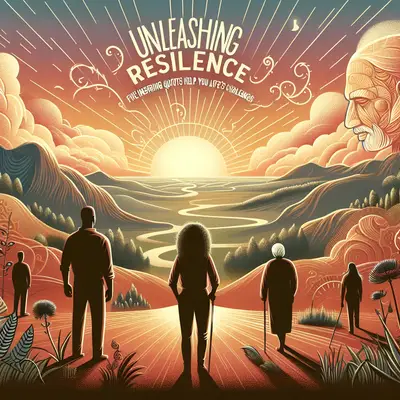
There is a quiet second before every turning point—the breath you take before you say yes, the pause before you send the application, the stillness before you admit you want more from your life. That small, invisible moment doesn’t get applause, but it’s where motivation is born. Not in perfection, not in certainty, but in the decision to move while your hands are still shaking. This article is for those in that exact in‑between: not who you were, not yet who you’re becoming, standing at the edge of a different life.
The Space Between “Not Anymore” And “Not Yet”
Motivation is often pictured as a rush of energy, a dramatic movie scene where everything suddenly makes sense. In real life, it usually arrives as a whisper: you can’t keep going like this. That whisper doesn’t immediately hand you a plan; it simply asks you to stop pretending you’re satisfied with less than what you know is possible.
The space between “this can’t be my story anymore” and “this is the life I choose” is uncomfortable. It’s where doubt, fear, and old habits try to drag you back. But it’s also where your next chapter is quietly negotiating its way into existence. In that space, you don’t need to have your future under control. You only need to be honest: Something in me is ready, even if everything around me isn’t.
Motivation, then, is less about hype and more about clarity. It’s seeing the cost of staying the same as clearly as you see the risk of changing. When staying where you are hurts more than the fear of moving forward, that’s your turning point. You won’t always feel brave—but you can always choose to be honest about what you want.
Quote 1: “Your life is allowed to change quietly, even if no one is clapping yet.”
We’re conditioned to believe that genuine change must be public: the transformation post, the big announcement, the official rebrand of your life. But some of the most powerful turning points happen without a single witness. You decide to stop chasing approval. You choose to send one email that scares you. You close your laptop an hour earlier and finally rest.
This quote is a reminder that progress doesn’t need an audience to be real. You don’t need validation for your transformation to count. Your life is allowed to shift in small, steady ways that no one else understands yet. The applause can come later—or not at all. What matters is that you are living closer to your own truth, one quiet decision at a time.
What You Tell Yourself When No One Is Listening
Motivation often gets tangled in other people’s voices—expectations, comparisons, and the invisible scoreboard of who is “ahead.” But the most powerful form of motivation is what you tell yourself when no one is measuring you, judging you, or watching you.
If your inner dialogue is harsh—I’m late, I’m behind, I’m not enough—it doesn’t just drain your energy; it sabotages your willingness to try. If, instead, your inner voice learns to say, I’m learning, I’m allowed to start small, I don’t need to impress anyone to improve, your effort becomes lighter. You are no longer performing for approval; you are practicing for growth.
Your self-talk is not just commentary—it’s direction. Every time you say, I always mess this up, your brain goes looking for proof. Every time you say, I’m still building this skill, your mind looks for small ways to support that growth. Motivation doesn’t start with shouting, it starts with the quiet honesty of: I’m not where I want to be—but I’m still worthy of getting there.
Quote 2: “Talk to yourself as if you’re the one person who never gave up on you.”
Imagine if the voice in your head was your most loyal ally instead of your harshest critic. The person who never gave up on you would not ignore your mistakes—but they would not define you by them either. They would say, Yes, that hurt. Yes, that was a setback. But I’m still here. And so are you.
This quote invites a new standard for motivation: loyalty to your own growth. When your inner voice is committed to not giving up on you, failure becomes feedback, not a final verdict. You become more willing to try again, not because you’re sure you’ll win, but because you’re no longer willing to abandon yourself when things get hard.
Choosing the Next Tiny, Honest Step
We often wait for a massive surge of motivation before we act—a big event, a final straw, the “perfect time.” Meanwhile, days turn into months. The truth is, most lives are rebuilt through tiny, unglamorous steps. The call you don’t want to make. The budget you finally open. The boundary you hold even when your voice shakes.
Motivation doesn’t always feel good at first. Sometimes it’s the discomfort of saying no to what numbs you and yes to what grows you. Sometimes it’s choosing structure over impulsiveness, clarity over chaos. But with each small, honest step, you prove to yourself that you are not stuck; you are in motion, even if the world can’t see it yet.
When your goals feel overwhelming, shrink them until they are doable today. Not “write a book,” but “write for ten minutes.” Not “get healthy,” but “take a twenty-minute walk.” You don’t have to conquer the whole mountain; you just have to be the kind of person who keeps taking the next step.
Quote 3: “If the mountain feels too high, make your victory the next foothold.”
This quote reframes progress from a distant summit to the next reachable grip. When you obsess over how far you still have to go, the journey feels impossible. When you focus on the next foothold, the climb becomes manageable, even meaningful.
Making each foothold a victory doesn’t mean lowering your standards; it means respecting the process. Each practical action in the right direction is not “just a small thing”—it’s the only way anything big ever gets built. Your job isn’t to leap to the top. Your job is to keep choosing the next foothold, again and again, until one day you look back and realize how far you’ve come.
Letting Go Of The Person You Had To Be
Sometimes the hardest part of change isn’t becoming someone new—it’s releasing who you had to be to survive. Maybe you learned to stay small so you wouldn’t threaten anyone. Maybe you became hyper-responsible because no one else stepped up. Maybe you wrapped your life around someone else’s needs so tightly that your own dreams went quiet.
Motivation is not always about adding more—more hustle, more goals, more pressure. Often, it’s about allowing old armor to fall away so your real self can breathe. That means grieving the version of you that coped the only way they knew how, while still daring to believe you’re allowed to evolve beyond them.
You don’t have to hate your past self to outgrow them. You can thank them for getting you this far, and still admit: The strategies that protected me yesterday are not the ones that will free me tomorrow.
Quote 4: “You are allowed to outgrow the survival version of you.”
This quote acknowledges that many of our “bad habits” were once solutions. Overworking was once your way to feel safe. People-pleasing was once your path to connection. Avoidance was once your way to handle overwhelm. But survival modes, left unchallenged, become cages.
Recognizing that you are allowed to outgrow those patterns is deeply motivating because it shifts the story from I’m broken to I adapted—and now I’m evolving. You are not betraying your past self by changing; you are honoring them by giving their struggle a better ending.
Staying With Yourself When It Gets Hard
The rush of beginning is exciting. New plans, new routines, new promises. But motivation is most meaningful when the honeymoon phase ends—when it’s no longer thrilling, when the results are slow, when you’re tempted to slip back into what’s familiar.
This is where many people decide they’re “not motivated enough” or “just not that type of person.” In reality, this is simply the part of the journey where discipline, kindness, and patience must step in. Growth isn’t a straight line; it’s a messy pattern of progress, resistance, adjustment, and trying again.
Staying with yourself through this cycle is a form of courage. It’s choosing not to disappear on yourself when things don’t go as planned. It’s learning to rest instead of quit, to adjust instead of abandon, to recommit instead of rewrite your worth.
Quote 5: “Don’t only believe in yourself when it’s easy to win.”
It’s tempting to believe in yourself only when success is visible—when the scale moves, the promotion comes, the follower count rises. But your deepest growth often happens in the invisible stretches: the weeks you show up and no one notices, the days you keep a promise to yourself even when there’s no reward in sight.
This quote challenges conditional self-belief. If you only believe in yourself when the odds are in your favor, you’ll abandon yourself the moment things get hard. But if you choose to believe in yourself especially when things are uncertain, you turn persistence into a habit, not a mood. You become the kind of person who keeps moving, not because success is guaranteed, but because self-trust has become non‑negotiable.
Conclusion
Your turning point may not look dramatic. It might not involve a big decision, a grand exit, or a viral moment. It might simply be this: you pause, take an honest breath, and admit you are ready for a different way of living—even if you don’t yet know what it will look like.
Let your life change quietly, if it needs to. Speak to yourself like someone worth not giving up on. Make the next foothold your victory. Outgrow the survival version of you. Believe in yourself when it’s hardest, not just when it’s convenient. You don’t need a perfect plan to begin; you only need to stop negotiating with the part of you that wants to stay small.
Begin before you’re ready. Your future doesn’t need you to be fearless—it only needs you to be willing.
Sources
- [American Psychological Association – Building Your Resilience](https://www.apa.org/topics/resilience) - Explains how people adapt to adversity and develop resilience, supporting the ideas of growth through challenges.
- [Harvard Business Review – The Power of Small Wins](https://hbr.org/2011/05/the-power-of-small-wins) - Discusses how incremental progress fuels motivation and performance, aligning with the focus on “footholds” and tiny steps.
- [Stanford University – Mindset by Carol Dweck](https://profiles.stanford.edu/carol-dweck) - Overview of research on growth vs. fixed mindsets, relevant to self-belief and evolving beyond old patterns.
- [National Institutes of Health – Self-Compassion and Psychological Well-Being](https://www.ncbi.nlm.nih.gov/pmc/articles/PMC3614520/) - Research article showing how treating yourself with kindness improves motivation and resilience.
- [U.S. Department of Health & Human Services – Setting Goals for Health](https://www.hhs.gov/fitness/resource-center/facts-and-statistics/setting-goals/index.html) - Practical guidance on breaking big goals into manageable steps, reinforcing the idea of focusing on the “next foothold.”
Key Takeaway
The most important thing to remember from this article is that this information can change how you think about Motivational.