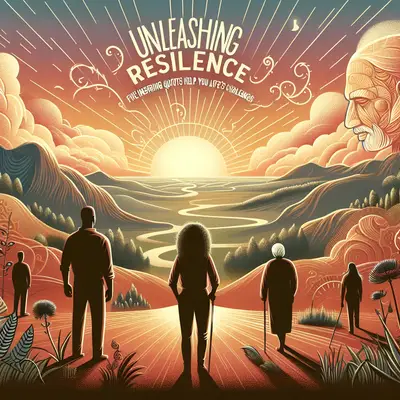
Some days you wake up ready. Other days you wake up heavy. Motivation can feel like a switch that’s either on or off—but what if it’s more like a muscle we slowly strengthen? You don’t have to feel unstoppable to take a small, brave step. You just have to be willing to move while you’re still a little unsure.
Motivation isn’t about waiting for a lightning bolt of inspiration. It’s about building a life where your daily choices quietly echo what matters most to you. This article is for the part of you that’s tired, honest, and still willing to try.
Motivation As A Daily Practice, Not A Rare Feeling
Motivation is often pictured as a dramatic moment: a speech, a breakthrough, a sudden surge of clarity. In reality, it’s usually less glamorous. It’s choosing to try again after a disappointing result. It’s showing up when the excitement is gone. It’s allowing yourself to be a beginner, even when your pride wants to be an expert.
Psychologists often describe motivation as the force that initiates, guides, and maintains goal-oriented behaviors. But that force isn’t born only from confidence and energy. It also grows from meaning, routine, and a sense that your actions matter, even in small ways.
When you stop waiting to "feel ready" and start building tiny habits that align with what you care about, something subtle shifts. You begin to see yourself as someone who follows through—even on difficult days. Over time, that identity becomes a powerful source of motivation on its own.
Motivation, then, is less about chasing a feeling and more about honoring a direction.
Quote 1: “Begin with the energy you have, not the energy you wish you had.”
Motivation often stalls at the starting line because we tell ourselves, “I’ll begin when I feel more awake, more confident, less afraid.” But if you tied your progress only to your best days, you’d leave most of your life untouched.
Beginning with the energy you have is an act of self-respect. It’s saying: I won’t disqualify myself just because I’m not at 100%. Maybe you only have 20 minutes of focus, not two hours. Maybe you can’t run 5 miles, but you can walk around the block. You’re not failing by doing less; you’re training yourself to do something instead of nothing.
This quote is an invitation to loosen perfectionism’s grip. You don’t need the “perfect window” to start. You need a sliver of willingness and a small, concrete action. Once you move, even slightly, you often discover more energy than you thought you had.
Every big change in your life will begin this way: not with ideal conditions, but with an imperfect, honest start.
Quote 2: “Discipline is how you protect your dreams on the days they don’t impress you.”
Dreams feel magical when they’re new. You’re fueled by possibility, bursting with ideas and excitement. But at some point, every dream loses its shine. The work becomes repetitive. The progress feels slow. The results look nothing like your imagined future.
This is where many people quietly quit—not loudly, but gradually. They still like the dream; they’re just no longer moved by it. The feeling that once carried them now feels far away.
Discipline steps in where emotions fall short. It doesn’t ask, “Am I inspired right now?” It asks, “What would a person serious about this do today?” That’s how you protect your dreams on the days you’re not particularly impressed by them.
Rather than seeing discipline as harsh or rigid, see it as a form of care. It’s you choosing to guard what matters from the ups and downs of your mood. Each time you act from commitment instead of impulse, you’re telling your future self: I didn’t abandon you just because today was unexciting.
Motivation can start the fire, but discipline keeps the light on when it’s dark.
Quote 3: “Your progress is louder than your pace.”
We live in a world that worships speed—fast results, instant success, overnight transformations. It’s easy to look at someone else’s timeline and feel behind. When you measure your worth by how quickly things happen, every delay feels like failure.
This quote is a reminder to shift your focus from how fast you’re moving to the fact that you’re moving at all. Progress is progress, even when it’s quiet and slow. Learning to walk again after a setback. Reading a few pages a day. Saving a small amount each month. Healing from something you don’t talk about publicly. None of these things move quickly, but they all change a life.
What truly matters is the direction of your movement, not the speed. Are you a little more patient than you were last year? A little more honest with yourself? A little more consistent with your habits? Those shifts rarely go viral, but they transform you deeply.
Let your own progress be what speaks for you—not the timeline others expect you to follow. Slow progress isn’t a sign you’re failing; it’s a sign you’re still in the game.
Quote 4: “You are not starting from nothing; you are starting from experience.”
One of the reasons starting again feels so heavy is the story we tell ourselves: I’m back at the beginning. After a setback, a break, or a painful detour, it’s tempting to believe you’ve lost everything you’ve worked for.
But you are never truly back at zero. Even if you’ve changed paths, lost momentum, or made mistakes, you carry something with you that wasn’t there before: experience. You bring the lessons of what didn’t work, the wisdom of your past attempts, and a deeper understanding of yourself.
Experience is often disguised as “failure” because it doesn’t arrive with trophies or applause. It arrives as clarity: knowing what you don’t want, what you can survive, what your limits are, and how far they can stretch.
When you begin again with this mindset, starting doesn’t feel like erasing your story. It feels like turning the page with more insight, more courage, and more honesty.
You are not a beginner in your own life. You are a returning student of your own strength.
Quote 5: “If you can’t see the whole path, walk the piece that’s in front of you.”
Waiting to see the entire road before taking a single step is one of the quietest ways we stay stuck. We want guarantees: that this choice will work out, that this job is the right one, that this relationship will last, that this risk will pay off. But life rarely offers full visibility.
This quote isn’t about ignoring long-term thinking; it’s about respecting the power of immediate, clear action. You might not know where you’ll be in five years, but you usually know one honest next step: send the email, sign up for the class, have the difficult conversation, schedule the appointment, write the first page.
When you walk the piece of the path you can see, two things happen. First, your confidence grows—not because you’ve figured out everything, but because you’re proving you can move without perfect clarity. Second, the next piece of the path often reveals itself only after you start walking.
Motivation doesn’t always show you the destination. Sometimes it just hands you enough light for the next meter. Your job isn’t to control the whole road; it’s to stop talking yourself out of the step you already know you need to take.
Bringing It Together: Living As Your Own Source of Momentum
Motivation will always rise and fall. Some days you’ll feel unstoppable; others you’ll feel uncertain, tired, or numb. That’s not a sign you’re broken. That’s simply what it means to be human.
What you can build is a life where your actions aren’t fully at the mercy of your moods. You can learn to begin with the energy you have, to let discipline protect your dreams, to honor progress over pace, to value experience over perfection, and to walk the part of the path you can see.
You don’t need to fix your entire life this week. You don’t have to map your whole future today. You only need to ask yourself one honest question:
What is one small, meaningful step I can take in the direction of who I want to become?
Then take it—quietly, imperfectly, bravely. Let that step be the beginning of your next chapter of momentum.
Sources
- [American Psychological Association – Motivation](https://www.apa.org/topics/motivation) – Overview of how psychologists define and study motivation and goal-directed behavior
- [Harvard Business Review – The Science of Motivation](https://hbr.org/2018/04/the-science-of-motivation) – Explores research-backed strategies for sustaining motivation at work and in life
- [Stanford University – Habits and Behavior Change (Stanford Medicine)](https://stanfordmedicine25.stanford.edu/blog/archive/2018/Habits.html) – Discusses how small, consistent habits shape long-term outcomes
- [Mayo Clinic – Willpower: Renewing Our Motivation and Self-Control](https://www.mayoclinic.org/healthy-lifestyle/adult-health/in-depth/willpower/art-20048496) – Explains the role of willpower and self-control in achieving goals
- [CDC – Goal Setting for Lifestyle Change](https://www.cdc.gov/healthyweight/losing_weight/getting_started.html) – Practical guidance on setting realistic goals and building sustainable progress
Key Takeaway
The most important thing to remember from this article is that this information can change how you think about Motivational.