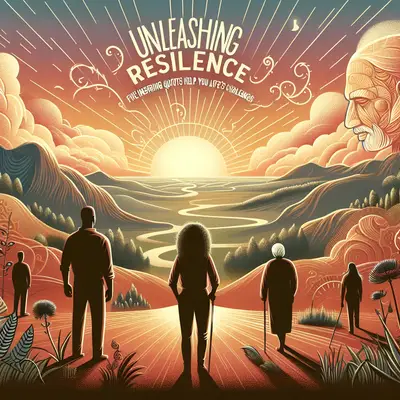
Some days, motivation feels like a spark. Other days, it feels like a fight. The clock keeps moving, responsibilities keep calling, and somewhere in between, you’re trying to remember why you started at all. This is the quiet battlefield where real motivation lives—not in perfection, but in choosing to keep going when the outcome is uncertain.
This article is for those days. Not the easy ones, but the heavy ones. The days when your dreams feel far, your energy feels low, and the gap between “who you are” and “who you want to be” feels impossibly wide. Here, we’ll explore how to turn pressure into purpose, uncertainty into direction, and self-doubt into a quieter, kinder voice. Along the way, you’ll find five powerful quotes—each with a different kind of strength hidden inside.
The Moment You Want To Quit: Staying Through The Middle
The beginning of any journey is crowded with excitement. The end—if it’s visible—comes with its own rush of relief and celebration. It’s the middle that feels dangerous. The middle is where boredom, doubt, and comparison grow loudest. It’s where the work is repetitive, the progress is subtle, and the applause is silent.
This is where the first quote lives:
“The middle is where most people leave the story—and where your future quietly waits.”
The “middle” can be the second month of a new routine, the third rejection letter, the fifth time you start over. It’s the stretch of road where you no longer have the hype of starting or the payoff of finishing, but you’re investing energy anyway. What makes this stage powerful is precisely how unglamorous it is.
Motivation in the middle isn’t about feeling unstoppable; it’s about being willing to feel unsure and still move. It means accepting that your progress may not be visible yet, but it’s real—hid in your habits, your resilience, and the way you return again. If you can stop seeing the middle as a sign you’ve failed and start seeing it as proof you’re still in the story, you’ll experience a subtle but profound shift: you go from chasing motivation to building character.
When Fear Shows Up: Walking With It Instead Of Running From It
Motivation is often sold as the opposite of fear, but they actually coexist. Almost every meaningful step in life carries some level of fear: of failure, of judgment, of change, of being seen. Fear’s job is to protect you from loss. But when it grows too big, it protects you from growth instead.
Here’s the second quote:
“You don’t have to become fearless; you just have to stop letting fear be the one who decides.”
Fear loves to speak in absolutes: “You’ll never make it.” “This won’t work.” “Everyone will see you fail.” It shows you the worst-case scenario and hides everything else. But motivation grows when you allow more voices into the room: courage, curiosity, hope, and a simple question—“What if it goes right?”
Walking with fear means acknowledging it without obeying it. It may still be in your chest when you send the application, start the project, or admit what you truly want. What changes is who you choose to trust. Every time you act with fear instead of waiting for it to disappear, you teach your nervous system that you can feel discomfort and still be safe. Over time, fear’s volume drops—not because it vanished, but because you stopped giving it the final vote.
Redefining Strength: The Power Of Small, Honest Effort
We tend to measure motivation in big gestures: staying up all night, huge risks, dramatic changes. But the most sustainable motivation often looks smaller and slower: going to bed on time, showing up for 30 minutes of focused effort, making one brave phone call. Tiny, honest actions have a compounding effect; they build a self-image based on what you actually do, not what you hope you’ll do someday.
Consider this quote:
“Your life is quietly shaped less by what you dream in one moment and more by what you repeat in the ordinary ones.”
Dreams are important—they give your effort direction. But repetition gives your life shape. Each day offers an invitation: Will you choose the habit that pulls you closer to yourself, or the one that pulls you further away? You don’t need to get it “right” every time, but you do need to practice choosing, again and again.
Motivation becomes more stable when it’s tied to identity, not just outcomes. Instead of saying, “I want to succeed,” try, “I’m becoming someone who shows up for what matters to me.” That small shift changes how you respond to setbacks. If your identity is built on winning, every loss feels like evidence that you’re not who you say you are. If your identity is built on showing up, then even on the days you fall short, you’re still living in alignment with your values.
Rest Without Guilt: Why Slowing Down Is Part Of Moving Forward
Many people secretly believe that “motivation” means “never needing rest.” But a life built on constant output eventually collapses, not because you were weak, but because your body and mind ran out of something essential: recovery.
Here’s the fourth quote:
“You are not a machine that sometimes breaks; you are a human who sometimes needs to breathe.”
Rest is not the opposite of ambition; it’s the support beam that holds it up. When you deny yourself rest, you also deny yourself clarity, creativity, and emotional resilience. Tired minds default to worst-case thinking; exhausted hearts convince you that nothing you do matters. Things feel harder not because your dream is wrong, but because your system is overloaded.
Giving yourself permission to pause—to take a walk, close your eyes, step away from your screen—doesn’t make you less serious about your goals. It proves you’re serious enough to protect the person working toward them. Rest can be active (exercise, hobbies, time with loved ones) or quiet (sleep, meditation, stillness), but it should always be guilt-free. You are not “slacking” by taking care of yourself; you are preserving the one resource your future absolutely depends on: you.
Keeping Your Own Light: Motivation When No One Is Watching
External validation is a powerful motivator: praise, recognition, financial rewards, social media engagement. These can all encourage you—but they can’t hold you. Eventually, you’ll face seasons where no one is clapping, watching, or even noticing what you’re trying to build. In those seasons, your inner reasons matter more than ever.
The fifth quote speaks to that quiet, private kind of motivation:
“The most reliable fuel is this: doing the work because it matters to you, even when no one is there to see it.”
When you anchor your motivation in someone else’s approval, you surrender control over your own spirit. A bad review, a slow month, a critical comment can suddenly feel like a verdict on your worth. But when your deepest reason is internal—growth, contribution, integrity, curiosity—then outer noise has less power to direct your path.
Ask yourself: If no one ever praised this, would I still want to do it? If no one ever knew, would this still feel meaningful? Your honest answers are a compass. They point you toward work, relationships, and priorities that feed you from the inside out. And those are the ones you can carry the longest, even through silence, setbacks, or slow progress.
Conclusion
Motivation is not a switch you flip; it’s a relationship you tend every day. It lives in the middle of your story, where continuing is harder than starting. It walks beside your fear, but doesn’t bow to it. It grows quietly in small habits, guards its strength with real rest, and shines brightest when you choose to keep going with no audience at all.
On your hardest days, remember: feeling discouraged doesn’t mean you’re not capable. Feeling afraid doesn’t mean you’re not brave. Feeling tired doesn’t mean you’ve lost your drive. It simply means you are human—and still in motion.
You don’t need a perfect plan to move forward. You just need one honest step, taken on purpose. And then another. And another. That is how pressure becomes purpose: not in one breakthrough moment, but in a thousand small choices to stay in your own story and keep writing the next line.
Sources
- [American Psychological Association – Building Your Resilience](https://www.apa.org/topics/resilience) – Explains how resilience is developed and why it matters during stress and setbacks
- [Harvard Business Review – Manage Your Energy, Not Your Time](https://hbr.org/2007/10/manage-your-energy-not-your-time) – Discusses the importance of rest, recovery, and energy management for sustained performance
- [NIH (National Institutes of Health) – The Power of Habit](https://newsinhealth.nih.gov/2012/01/power-habit) – Explores how habits form and how small, repeated actions shape behavior over time
- [Cleveland Clinic – Understanding Fear and Anxiety](https://health.clevelandclinic.org/fear-vs-anxiety) – Breaks down fear and anxiety, and offers guidance on managing them in daily life
- [Yale University – The Science of Well-Being (Course Overview)](https://oyc.yale.edu/psychology/psyc-157) – Summarizes research-backed factors that contribute to lasting happiness and internal motivation
Key Takeaway
The most important thing to remember from this article is that this information can change how you think about Motivational.