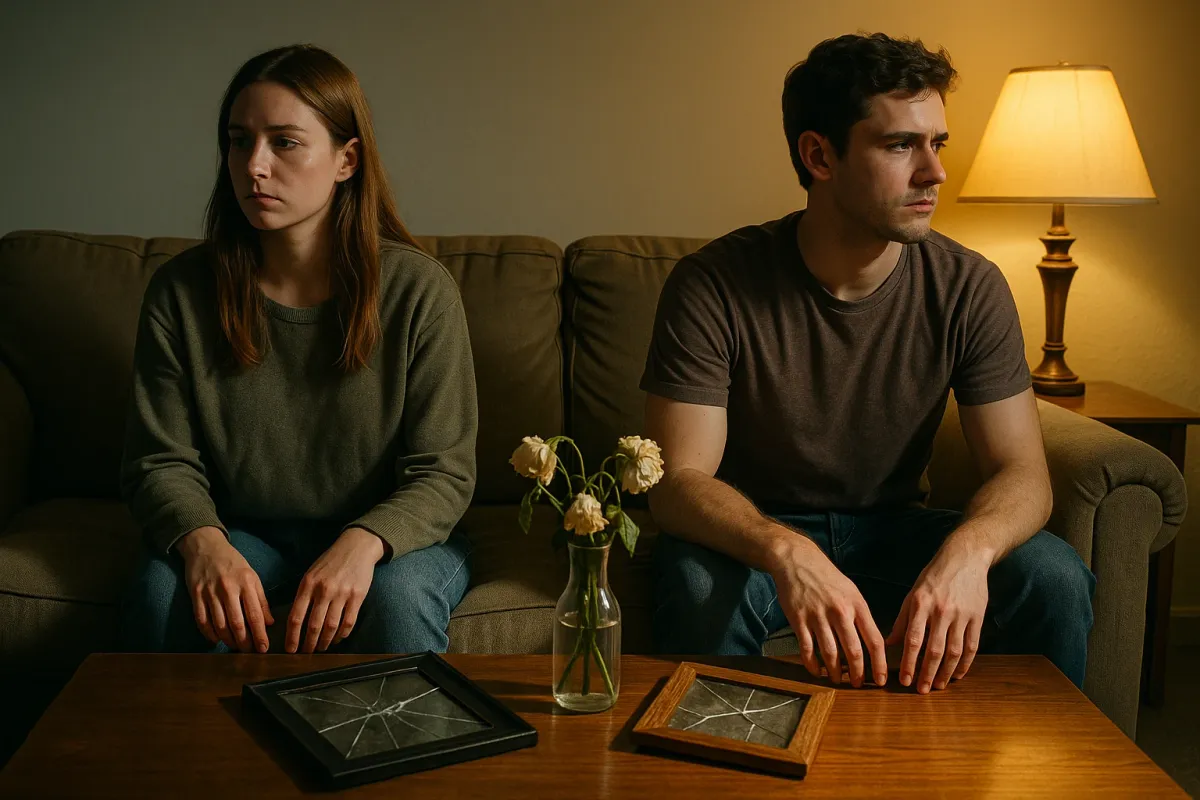
Some of the most important love stories in the world right now are not the ones that end in weddings, but the ones that end in a quiet decision to walk away. As people online share the “red flags” they ignored in relationships that turned deeply toxic, headlines are filling with real stories of heartbreak, emotional damage, and the slow unravelling of self-worth. One trending article collects these stories—from partners who dismissed gaslighting as “moodiness,” to people who stayed after repeated lies because “love is supposed to be hard.”
These conversations are timely and necessary. They reveal a simple but often painful truth: love alone does not make a relationship healthy. In a culture that glorifies “sticking it out,” learning to recognize red flags—and to honor your own boundaries—is an act of radical self-love. Below are five quotes inspired by what people are sharing right now, paired with reflections to help you navigate love that hurts more than it heals.
“Real love doesn’t ask you to ignore the knot in your stomach.”
When you read the stories being shared—partners who joke cruelly in public, who “forget” to text for days, who explode in anger then blame stress—you’ll notice one common thread: the body almost always knew first. People describe that sick feeling in their chest, the tightness in their throat, the racing thoughts before sleep. Yet they stayed, telling themselves, “It’s not that bad,” or, “Everyone has flaws.” This quote invites you to take your own discomfort seriously. Love should bring some nervous butterflies, not chronic anxiety. The knot in your stomach is not drama; it’s data. It’s your inner compass whispering, “Something doesn’t fit here.” Listening to that signal is not disloyalty to the relationship—it is loyalty to yourself.
Quote 1: “If you have to silence your own heart to keep their love, you’re not being loved—you’re being edited.”
This speaks directly to the stories of people who shrank themselves—laughing less loudly, sharing fewer opinions, dressing differently—because their partner “didn’t like it.” Editing small things is normal in relationships; we naturally adjust. But when you consistently silence who you are just to keep the peace, you are no longer in a relationship with someone who loves you—you are in a relationship with a version they’ve curated. Motivating yourself to notice this is vital: you deserve to be seen, not revised. When someone truly loves you, they may ask you to grow, but they will never demand that you disappear.
“Red flags are not puzzles to solve; they are exit signs to consider.”
The viral “red flag” discussions show how many people once treated warning signs like challenges: “I can fix this,” “They just need someone patient,” “Their ex didn’t understand them—but I will.” This mindset can trap compassionate people in deeply painful dynamics. You become the repair team for someone who doesn’t truly want to change. This quote reframes red flags—not as proof that you’re meant to rescue someone, but as information you are allowed to act on. You don’t have to wait for things to get catastrophic to take them seriously.
Quote 2: “You are not obligated to stay just because you finally understand why they are broken.”
So many of the stories behind today’s headlines involve partners with traumatic pasts: difficult childhoods, abandonment, prior betrayal. Understanding a person’s pain can increase your empathy, but it must not erase your boundaries. You can deeply care about why someone lashes out, shuts down, or cheats—and still choose to walk away from those behaviors. Compassion is not a contract. Your love is not a rehabilitation program with no end date. This quote is a reminder that insight into someone’s wounds does not require you to live inside them.
“Love that isolates you is slowly teaching you to doubt your own worth.”
Again and again, people who shared their toxic relationship experiences online mention isolation. At first, it looked like “just wanting more couple time.” Then it became complaints about certain friends, criticism of family, subtle shaming: “You’re different when you’re with them,” “They don’t really get us,” “It’s weird you still talk to your ex-classmates.” Over time, the circle shrank—until they felt as if their partner was their entire world. This isolation made it harder to believe anyone else would care, or understand, or want them. Love that cuts you off from community is not protecting you; it is preparing you to accept less and less.
Quote 3: “If their love demands that you stand alone, it’s not love—it’s control wearing a romantic mask.”
Control rarely introduces itself as control. It introduces itself as “care,” “concern,” “just wanting what’s best for us.” But any “care” that consistently pulls you away from people and places that nourish you is deeply suspect. This quote urges you to measure love not only by what it says, but by what it subtracts from your life. Does this relationship narrow your world, or does it broaden it? Healthy love may ask you to adjust your boundaries with others, but it never demands that you live in emotional solitary confinement. You deserve a love that celebrates your connections, not one that slowly erases them.
“Your future self is watching—give them a story where you chose you.”
Many of the people reflecting on their toxic past relationships today describe a turning point: the night they finally cried on a friend’s couch, the moment a therapist named the word “abuse,” the second they looked in the mirror and didn’t recognize the person staring back. What pushed them forward was often imagining the life they would have if they stayed versus the life they might create if they left. This inner vision can be a powerful motivator when you feel stuck. Your future self—wiser, calmer, more grounded—is quietly waiting for you to take that first step toward them.
Quote 4: “One of the bravest kinds of love is the love that packs its bags and walks away.”
We tend to equate bravery in love with staying: weathering storms, forgiving again, holding on no matter what. But today’s stories remind us that sometimes the most courageous act is leaving a situation that is slowly dismantling you. Walking away does not mean you never loved them; it means you finally love yourself, too. This quote invites you to see departure not as failure, but as a profound declaration: “My heart is not a place where harm is allowed to live.” Choosing yourself can be terrifying, especially if you’ve been made to feel unworthy. Yet it is often the first step toward a life where kindness—to yourself and others—is possible again.
“Healing after toxicity is slow, but it is still love’s work.”
After a toxic relationship ends, the headlines usually move on. What they don’t show is the long, quiet road of healing: learning to trust again, unlearning the reflex to apologize for everything, rebuilding friendships, reclaiming hobbies. Survivors of painful relationships often report that the hardest part isn’t leaving; it’s sitting with the emptiness afterward. The noise, the drama, the constant emotional chaos had become a twisted form of familiarity. Without it, life feels strangely quiet. This is where love must turn inward and become patient, everyday care.
Quote 5: “The gentlest love you will ever know is the love that helps you come back to yourself.”
This quote is a blessing over your healing process. Coming back to yourself might look like small, unglamorous acts: going for a walk without checking your phone obsessively, ordering food you actually like instead of what they preferred, laughing too loudly with someone who feels safe. It is the slow realization that your needs are not inconveniences, but compass points. As you heal, you may start to see love differently—not as intensity, not as constant highs and lows, but as a steady presence where you feel both accepted and free. That is love’s truest work: not burning you out, but bringing you home.
Conclusion
The stories behind today’s “red flag” headlines are not just gossip—they are guideposts. They remind us that love is not proven by how much pain we can tolerate, how many chances we give, or how small we can make ourselves to keep someone else comfortable. Love is proven by how gently we hold ourselves while we learn, how bravely we speak up when something feels wrong, and how willing we are to walk away from what dims our light.
If you recognize yourself in these reflections, let these quotes be quiet companions, not loud commands. You don’t have to change everything overnight. Start with one small act of self-respect, one honest conversation, one boundary named out loud. Love is not meant to erase you. The right relationship—whether with someone new, or with yourself—will feel like finally being allowed to stay.
Key Takeaway
The most important thing to remember from this article is that this information can change how you think about Love Quotes.