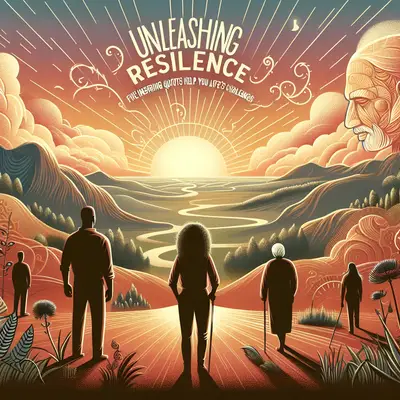
Some days motivation feels like a distant language—something you remember, but can’t quite speak. You know you want to grow, change, move forward, but everything in you whispers, “Not yet. I’m not ready.”
This piece is for those in-between moments: when you’re not at rock bottom, not at your best, just quietly stuck somewhere in the middle. These quotes and reflections are meant to be a hand on your shoulder—a reminder that you don’t have to be fearless or fully prepared to start. You just have to be willing to show up as you are, and keep showing up.
The Power Of Small, Honest Beginnings
We often imagine motivation as a burst of energy—loud, obvious, cinematic. But in real life, it’s rarely fireworks. It’s more like a quiet decision you remake over and over: “I’ll try again today.”
Motivation isn’t a personality trait you either have or don’t. It’s a skill you build. Research in psychology shows that our beliefs about our own abilities, our sense of purpose, and our environment all shape how motivated we feel. That means motivation isn’t magic; it’s something we can influence with our choices, our routines, and the way we talk to ourselves.
You don’t need a dramatic turning point to begin. You don't need full clarity, a perfect plan, or a life-changing epiphany. You can start from right where you are—tired, unsure, overwhelmed—and still build something meaningful.
Below are five quotes to carry with you in those “I don’t feel ready” seasons, along with thoughtful reflections on how to live them out in small, honest ways.
1. “Start from the place that hurts, but move in the direction of hope.”
Motivation often hides behind discomfort. We wait to feel better before we act, but sometimes movement is what helps us feel better in the first place.
Starting from the place that hurts means you don’t sugarcoat how you feel. You acknowledge the heaviness, the disappointment, the confusion. You let it exist without pretending everything is fine. But you refuse to build your whole life around that pain.
Moving in the direction of hope doesn’t require certainty; it only requires a choice not to stay curled up in the same mental corner forever. It might look like making one phone call you’ve been avoiding, opening the document you’ve been postponing, taking a short walk even when you’d rather shut down.
Hope grows when you give it motion. Every tiny action says, “This isn’t the end of my story.” You don’t need to know how page 200 will read. You just need to be willing to write line one.
2. “You don’t have to feel brave to do the next right thing.”
We often imagine brave people as those who feel fearless—steady hands, calm hearts, unwavering confidence. In reality, brave people feel the same tremors and what-ifs as everyone else; they’ve simply made peace with moving forward while those feelings are still present.
The “next right thing” is usually much smaller than we think. It’s not reinventing your entire life overnight; it’s answering the email instead of hiding from it, cleaning the one corner of your room that keeps stressing you out, or finally making that dentist appointment you’ve put off for a year.
Motivation can crumble under vague, huge goals like “fix my life” or “be more disciplined.” The next right thing is specific, humble, and honest. It respects your current capacity while gently stretching it.
Ask yourself: If I listened to the part of me that wants better, not the part that wants to avoid, what would I do in the next 10 minutes? Do that. You can negotiate with tomorrow later.
3. “Progress is anything that makes your future self grateful you tried.”
We often measure progress by dramatic before-and-after transformations: major promotions, visible weight loss, big announcements, public achievements. But most real growth is quiet, private, and incredibly easy to overlook.
This quote reframes progress as anything your future self would thank you for—not just the impressive things. Drinking a glass of water, going to bed 20 minutes earlier, choosing a kinder thought about yourself, journaling for five minutes—all of these are seeds your future self will one day be grateful you planted.
Motivation becomes gentler and more sustainable when you widen your definition of success. Instead of asking, “Did I change my whole life today?” try, “Did I leave today a little lighter for the person I’m becoming?”
When you start living with your future self in mind, even small efforts feel meaningful. You are no longer just getting through the day—you are quietly building a life that will feel more like home to you tomorrow, next month, next year.
4. “Discipline is a kindness you show your dreams when feelings fade.”
Feelings are real, but they are not reliable project managers. Some days you’ll feel inspired, focused, and ready to take on anything; other days your motivation will be nowhere to be found. If your dreams depend on being in the mood, they’ll never grow roots.
Discipline is often framed as harsh, rigid, or unforgiving—but at its best, it’s an act of deep kindness. It’s the system you build so that your dreams are not at the mercy of your worst moods or most exhausting days.
Think of discipline as a supportive structure, not a punishment. It can be as simple as:
- A 15-minute writing window every morning, no matter what
- A rule that you move your body in some small way daily, even if it’s just stretching
- A boundary that you put your phone in another room while you work for 25 minutes
You don’t have to become a machine. You just need enough structure to gently carry you forward on the days when your motivation disappears. That consistency is how small wishes become actual lives.
5. “You are allowed to be both a work in progress and a work of art.”
A lot of us withhold self-respect until we hit certain milestones. We say things like, “When I lose the weight… when I get the job… when I stop making this mistake… then I’ll feel proud of myself.”
But growth doesn’t work well under constant self-criticism. Research on self-compassion shows that people who treat themselves with kindness when they fail are actually more likely to take responsibility, improve, and stay motivated over time. That means accepting your rough edges isn’t laziness; it’s fertile ground for long-term change.
Seeing yourself as both a work in progress and a work of art means this: you can acknowledge your flaws, your patterns, your unfinished chapters—without stripping away your value. Your worth is not something you earn at the finish line; it’s the reason you deserve to keep running the race, even when you’re tired.
Motivation deepens when it’s not driven by shame. When you believe you are already worthy of care, effort, and patience, it becomes easier to show up for yourself, not as a punishment, but as an act of respect.
Conclusion
Motivation is rarely a lightning strike; it’s more like a slow sunrise. At first, it doesn’t look like much. But if you stay with it—if you keep choosing small, hopeful actions in the dark—the light grows.
You don’t have to wait until you feel ready, confident, or healed to begin. You can start from the place that hurts, do the next right thing, honor tiny bits of progress, practice gentle discipline, and remember that you are already a work of art, even as you keep evolving.
Share the quote that speaks to you most. Save it somewhere you’ll see it again on a hard day. And when everything in you whispers, “Not yet,” try answering back, “Maybe just a little, today.”
Sources
- [American Psychological Association – Motivation](https://www.apa.org/topics/motivation) - Overview of how motivation works and factors that influence it
- [Harvard Business Review – What Motivates You at Work?](https://hbr.org/2019/10/what-motivates-you-at-work) - Explores different drivers of motivation and how to harness them
- [Greater Good Science Center, UC Berkeley – The Power of Self-Compassion](https://greatergood.berkeley.edu/article/item/the_power_of_self_compassion) - Explains why self-compassion supports resilience and lasting motivation
- [Mind – How to Improve Your Self-esteem](https://www.mind.org.uk/information-support/types-of-mental-health-problems/self-esteem/about-self-esteem/) - Discusses self-esteem, self-acceptance, and their impact on wellbeing and action
- [National Institutes of Health – Physical Activity and Your Heart](https://www.nhlbi.nih.gov/health/physical-activity-and-your-heart) - Shows how small, consistent habits create significant long-term health benefits
Key Takeaway
The most important thing to remember from this article is that this information can change how you think about Motivational.