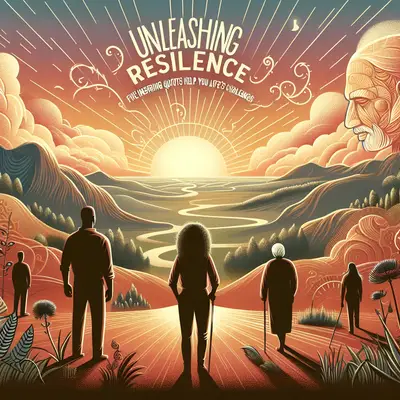
Some days don’t feel like a turning point. They’re not dramatic or life‑changing. They’re the days when the alarm rings, the coffee is lukewarm, your to‑do list is long, and your energy feels small. Yet these “ordinary” days quietly decide who you become. This is where motivation matters most—not the loud, fireworks kind, but the steady courage to keep showing up when no one is clapping.
This piece is for the parts of you that are tired, still trying, and wondering if it’s making any difference. It’s a reminder that your effort already counts, especially on the days that don’t look special at all.
Why Everyday Motivation Matters More Than You Think
Motivation is often misunderstood as a surge of excitement that magically makes everything easy. In reality, research shows that lasting motivation is usually built from small, repeated actions and a clear sense of purpose, not flashes of inspiration. The energy you bring to folding laundry, studying late, making meals, sending emails, or caring for family is part of a quiet foundation you are laying every day.
Those daily choices—showing up to your job, practicing a skill, going for a short walk instead of doing nothing—shape your future more than the rare “big” moments you might be waiting for. Over time, those seemingly unremarkable decisions compound into very real progress: a stronger body, a more stable career, a calmer mind, a more grounded sense of self.
Motivation for the ordinary days is not about forcing yourself to be positive; it’s about remembering why your effort matters. It’s about seeing your life as worthy of care even when there are no dramatic plot twists, and recognizing that consistency is its own kind of quiet bravery.
Quote 1: “Your small steps are still steps, and they are carrying you somewhere.”
When life feels stuck, it’s easy to dismiss what you’re doing because it looks “small”: answering one email, reading three pages, saving a few dollars, taking a ten‑minute walk. But progress often looks ordinary up close. You rarely notice a single brick in a sturdy house, yet every brick had to be placed.
This quote is a reminder that motion doesn’t have to be spectacular to matter. Tiny improvements accumulate in ways you don’t see day‑to‑day. One extra skill learned, one kind conversation, one better choice about how you spend an hour—they shift your direction, even if only by a degree. Over weeks and months, that one degree becomes a different destination.
You don’t have to see the finish line to be moving toward it. When you feel like what you’re doing is insignificant, pause and ask: “If I did this small thing most days for a year, where could it take me?” That question can turn a single step into the beginning of a path.
Quote 2: “You are allowed to move slowly. You are not required to stop.”
We often treat “slow” as another word for “failing”: slow progress, slow healing, slow learning. But slowness is not the enemy; quitting on yourself is. Life rarely unfolds in straight lines. Some seasons will feel like fast forward; others, like walking through mud. Both are part of being human.
This quote gives you permission to adjust your pace without abandoning your direction. Maybe you can’t give 100% today. Give 30%. Maybe you can’t run, but you can stretch. Maybe you’re not ready to finish the project, but you can research one resource or send one message. That still counts.
Mental health research often emphasizes the power of breaking tasks into tiny, manageable pieces. When your mind is overwhelmed, “keep going” doesn’t have to mean “go hard.” It can mean “go gently, but don’t give up.” Slow is still movement. Slow is still worthy. Slow can still take you where you’re meant to go.
Quote 3: “Discipline is how you show future you that you kept your promise.”
We usually talk about discipline as something harsh: rules, restriction, hard work without joy. But at its core, discipline is a quiet act of loyalty—to your future self. Every time you follow through on a commitment, even a small one, you’re sending a message forward in time: “I didn’t forget you. I did something for you today.”
This perspective redefines discipline as a form of self-respect. When you choose to study instead of scroll, to save instead of spend, to speak kindly instead of lashing out, you’re building a life that future you will be thankful to inherit. It may not feel like much in the moment, but those decisions add up to more options, more peace, more inner trust.
Over time, this kind of consistency also strengthens your identity: you start to see yourself as someone who can be trusted, by yourself and others. Motivation then stops being a mysterious feeling you wait for and becomes a relationship you build—with the person you’re slowly becoming.
Quote 4: “On the days you feel invisible, your effort is still visible to your future.”
There will be days when no one sees how hard you’re trying. No one knows how much courage it took to get out of bed, to speak up in a meeting, to show up to class, to be patient with a child, to say “no” or “enough” or “I need help.” You may feel unseen and underappreciated.
This quote is a reminder that even when people don’t notice, the future does. Causes have effects. Effort leaves traces. The boundaries you set today become the emotional safety you stand on tomorrow. The late nights of learning become competence and confidence later on. The quiet decision to stay kind, even when you’re hurting, shapes your character in ways that will matter deeply one day.
External validation is fragile; it comes and goes. Internal validation—the understanding that your actions have long-term meaning—can carry you when applause is absent. Your effort isn’t wasted just because it isn’t witnessed.
Quote 5: “You don’t have to know how it all works out to deserve giving it your best.”
Uncertainty can drain motivation faster than almost anything. “What if this doesn’t pay off? What if I fail? What if this isn’t the right path?” Those questions can paralyze you before you even start. But very few people who end up somewhere meaningful knew exactly what they were doing when they began.
This quote invites you to detach your effort from guarantees. You are worthy of trying, even without certainty. You are allowed to invest in yourself, your dreams, your healing, your growth, without a contract promising perfect outcomes. Effort itself can be transformative: you learn, you adapt, you discover strengths and limits you didn’t know you had.
Sometimes your original goal will change along the way. What you learn while giving your best can redirect you to something better suited for you. But you won’t find that path by standing still, waiting for instructions. You find it by walking, listening, adjusting, and continuing to show up.
Conclusion
Motivation isn’t a magic switch. It’s more like a relationship: some days it feels strong, some days distant, some days quiet and steady. What matters is not whether you feel perfectly inspired, but whether you keep honoring the life you want through the choices you make now.
Your small steps are still steps. Your slow progress is still progress. Your discipline is a promise delivered to your future self. Your unseen effort is still reshaping what tomorrow can look like. And even without knowing exactly how it all unfolds, you are worth the work of becoming.
On the ordinary days—the messy, uneventful, tired ones—remind yourself: this is where my story is truly being written. And today, in all its imperfection, is still a day worth showing up for.
Sources
- [American Psychological Association – Building New Habits](https://www.apa.org/topics/behavioral-health/healthy-habits) – Explains how small, consistent actions and habit formation support long-term change and motivation.
- [Harvard Business Review – The Power of Small Wins](https://hbr.org/2011/05/the-power-of-small-wins) – Discusses how minor progress in meaningful work significantly boosts motivation and engagement.
- [National Institutes of Health – Behavioral Approaches to Health](https://www.ncbi.nlm.nih.gov/pmc/articles/PMC6826802/) – Research overview on how incremental behavior changes contribute to health and well-being over time.
- [Mayo Clinic – Stress Management and Resilience](https://www.mayoclinic.org/tests-procedures/stress-management/about/pac-20384998) – Covers practical strategies like breaking tasks into smaller steps to build resilience and stay motivated.
Key Takeaway
The most important thing to remember from this article is that this information can change how you think about Motivational.