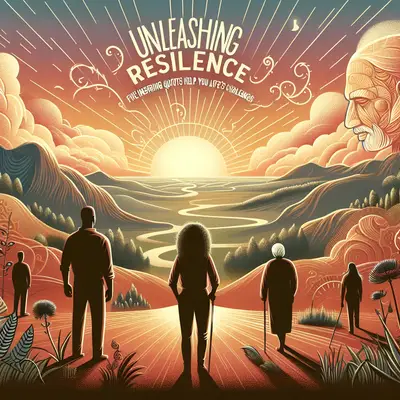
Some days, motivation feels loud and electric. Other days, it’s quiet and almost invisible—a single small decision you make when nobody is watching. The truth is, the most important progress often doesn’t look impressive in the moment. It looks like showing up tired. It looks like trying again after an awkward failure. It looks like not quitting when no one would blame you if you did.
This is for the days that don’t feel epic, yet still matter. For the work that feels small but is slowly changing you. For the version of you who keeps going, even when the progress is too quiet to post.
The Hidden Strength Of Showing Up When You Don’t Feel Ready
Motivation is rarely a lightning bolt. More often, it’s a series of small choices that slowly shift who you are and what you believe is possible.
Quote 1: “You don’t have to feel ready to be ready. Showing up is its own kind of courage.”
You will almost never feel perfectly prepared for the things that matter. Jobs, relationships, new skills, big dreams—most of them are reached by people who were scared and still walked forward. Courage isn’t the absence of fear; it’s the decision that your future matters more than your comfort.
On the days when your confidence is low, lower the bar for what “showing up” means, but don’t disappear. Ten minutes of effort is still evidence that you’re not giving up on yourself. Over time, these small, imperfect showings add up to a story of quiet bravery. You’re not behind; you’re in the middle of becoming.
Turning Setbacks Into Quiet Training Grounds
We often talk about failure like it’s a dead end. In reality, it’s more like a training ground nobody advertises—messy, humbling, but full of lessons you can’t get any other way.
Quote 2: “A setback is not the end of your story; it’s the chapter where you learn what you’re really made of.”
When something falls apart—a plan, a job, a relationship—it’s tempting to decide that you are the failure. But failing at something is not the same as being a failure. The moment you separate your identity from your outcome, you gain power. You can analyze instead of attack yourself. You can adjust instead of abandon your path.
Ask yourself: What did this teach me that success never could have? Maybe you learned where your boundaries need to be stronger. Maybe you discovered a weakness that, once trained, becomes your quiet superpower. You’re allowed to be disappointed and still decide to use what happened as raw material, not a final verdict.
Small Steps, Big Directions: Why Tiny Progress Still Counts
We often underestimate the impact of small, consistent actions because they don’t feel dramatic. But motivation grows when you can see—even in small ways—that your actions are moving you somewhere new.
Quote 3: “Tiny steps in a true direction will take you farther than big leaps toward a life you don’t really want.”
There is a difference between chasing what looks impressive and moving toward what feels honest. Motivation dies quickly when you are climbing a ladder you never wanted to be on. It may be quieter, but it is far more sustainable to build a life that actually fits you.
Let your small steps reflect what matters to you: reading a few pages that expand your thinking, saving a few dollars that build your safety, sending one message that strengthens a relationship, practicing a skill for fifteen minutes. None of these acts will change your life in a day, but they will absolutely change the direction of your days. Over time, direction matters more than speed.
Being On Your Own Side When Your Mind Turns Against You
Some of the hardest battles aren’t with circumstances, but with the voice in your own head—the one that doubts, criticizes, and compares. Motivation doesn’t only come from big dreams; it also comes from the way you talk to yourself while you’re trying.
Quote 4: “Don’t be the reason you give up on yourself. Be the voice that says, ‘Stay. Try again. You’re worth the effort.’”
You have been with yourself through every version of your life. You know your worst mistakes and your quietest victories. That gives you a choice: you can use that knowledge as a weapon or as a source of compassion.
What if you spoke to yourself the way you would speak to a friend you deeply respect—firm, honest, but never cruel? Motivation rooted in shame burns out quickly. Motivation rooted in respect—I am worth the work it takes to grow—can last a lifetime. You don’t have to like where you are to treat yourself with dignity while you grow beyond it.
Choosing Hope On Ordinary Days
Not every day will be a breakthrough. Many of your most important days will be quiet, repetitive, and unremarkable on the outside. But motivation isn’t only about big moments; it’s about what you choose to believe in the middle of ordinary life.
Quote 5: “Hope is not denial of reality; it’s the decision to believe that this moment is not the whole story.”
Hope does not ignore the difficulties in front of you. It simply refuses to let them be the only truth. You can acknowledge the pressure, the uncertainty, the fatigue—and still believe that your effort matters, that change is possible, that the story is still being written.
On the days that blur together, let hope be practical: one task finished, one conversation started, one boundary kept, one reminder that you have survived every hard day before this one. You do not need proof of the entire path to trust that your next honest step is worth taking.
Conclusion
Motivation is not a constant flame; it’s something you protect, rebuild, and sometimes borrow from your future self. There will be days when the best you can do is show up halfway—and those days still count. Your effort is never wasted if it’s teaching you, shaping you, or keeping you in motion toward a life that feels truer to who you are.
You are allowed to move slowly. You are allowed to start again. You are allowed to want more for your life without apologizing for it. Even when it doesn’t shine, your effort is building something you can’t fully see yet. Keep going—you’re not just working on goals; you’re quietly becoming someone you can trust.
Sources
- [American Psychological Association – The Road to Resilience](https://www.apa.org/topics/resilience) – Explains how people adapt to adversity and stress, supporting the idea that setbacks can build inner strength.
- [Harvard Business Review – How Small Wins Unleash Big Changes](https://hbr.org/2011/05/small-wins-and-feeling-good) – Discusses the power of small, consistent progress in motivation and performance.
- [Mind – What Is Self-Esteem?](https://www.mind.org.uk/information-support/types-of-mental-health-problems/self-esteem/about-self-esteem/) – Provides insight into self-worth and how our inner voice affects our motivation.
- [National Institutes of Health – Growth Mindset and Motivation](https://www.ncbi.nlm.nih.gov/pmc/articles/PMC5586880/) – Research-based look at how beliefs about growth influence effort and perseverance.
- [Mayo Clinic – Stress Management: Resilience](https://www.mayoclinic.org/tests-procedures/resilience-training/in-depth/resilience/art-20046311) – Outlines practical ways to build resilience that echo themes of persistence and coping with setbacks.
Key Takeaway
The most important thing to remember from this article is that this information can change how you think about Motivational.